
How Molecular Distillation “Steams Away” Fish Oil Odor While Preserving EPA/DHA
Fish oil is prized for omega‑3s—especially EPA and DHA—but many products struggle with a familiar issue: the fishy smell. Molecular distillation (often implemented as short path or wiped‑film molecular distillation) is one of the most practical ways to reduce odor without “cooking” away the valuable fatty acids.
What Causes the “Fishy” Smell in Fish Oil?
Odor is not one single molecule—it is a mix of small, volatile compounds.
In plain language, fishy odor mostly comes from low‑molecular‑weight volatile compounds that can form during handling and oxidation—such as certain aldehydes, ketones, and amines (for example, trimethylamine is commonly associated with “fishy” notes). These molecules are relatively easy to evaporate compared with the heavier triglycerides that carry EPA/DHA.
The challenge is that traditional high‑temperature deodorization can also accelerate oxidation or causethermal degradation—exactly what high‑value omega‑3 producers want to avoid.
Because “easy to evaporate” is only half of the story. Normal distillation often needs higher temperatures and longer residence time. In my experience, that combination increases the risk of damaging sensitive omega‑3s. Molecular distillation targets volatility differences under high vacuum, so separation happens at much lower effective boiling conditions.
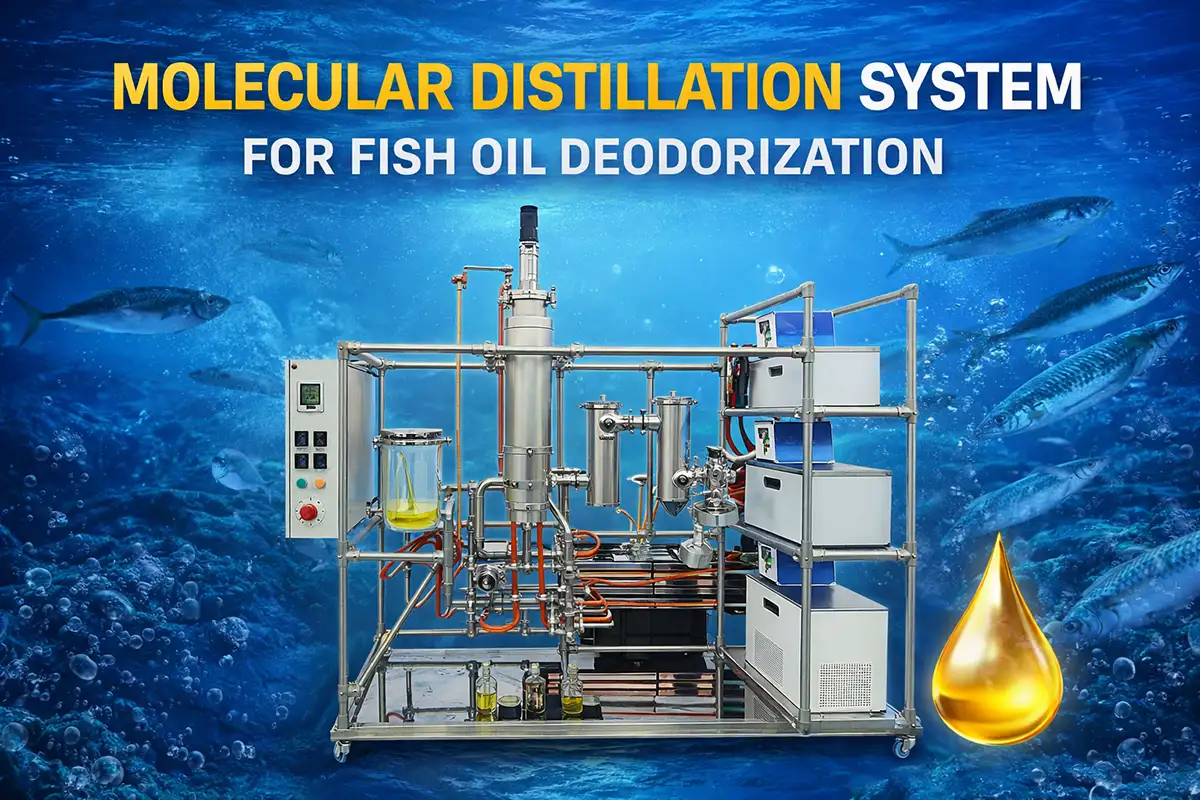
The Key Idea: “Separate by Volatility, Not by Cooking”
Molecular distillation works because molecules travel differently in high vacuum.
Molecular distillation is a form of high‑vacuum, short‑residence‑time distillation. Under deep vacuum, the mean free path of molecules increases—so evaporated molecules can travel directly to a condenser surface with fewer collisions. Practically, this enables:
Lower operating temperatures than conventional distillation for the same separation goal.
Very short exposure time on the heated surface (seconds rather than minutes).
Gentle handling of heat‑sensitive components like EPA and DHA.
For readers who want a deeper equipment explanation, these internal references may help:wiped film evaporator working principle,short path molecular distillation vs. molecular distillation, and the product page for a molecular distillation system.
So how does odor removal happen?
I like to explain it as a controlled “selective evaporation” step: the lighter, smell‑active molecules are encouraged to leave first, then they are condensed and collected separately. Meanwhile, the heavier omega‑3 rich fraction is kept in the residue/distillate path designed for product retention (depending on process goal).
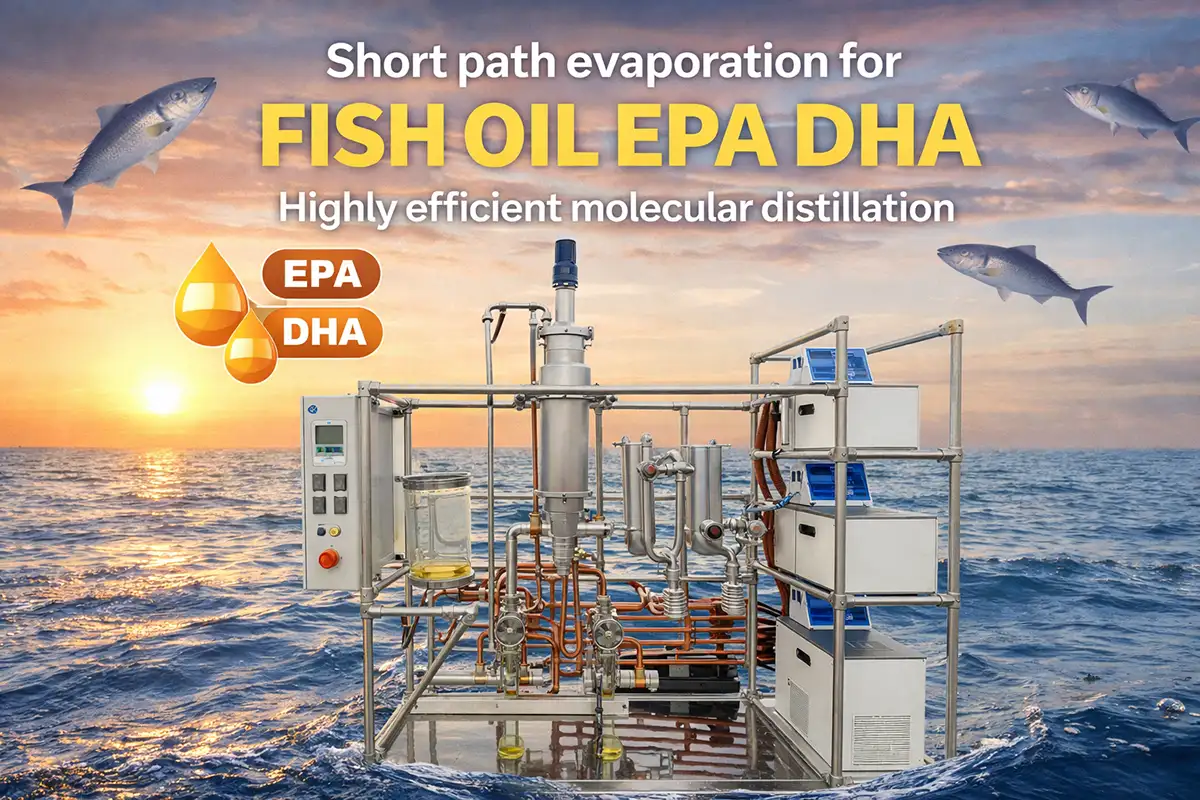
It can—if parameters are not tuned. In my view, the “win” comes from operating at conditions where the most volatile odor compounds move preferentially, while EPA/DHA (often in triglyceride/ethyl ester form) are far less likely to evaporate. High vacuum and short residence time help keep omega‑3s stable and in the desired fraction.
Evidence-based note: Authoritative nutrition guidance consistently highlights omega‑3 importance. For example, the World Health Organization (WHO) has long recommended regular intake of omega‑3 fatty acids (EPA/DHA) from fish or other sources as part of cardiovascular health strategies (recommendations vary by population and guideline context). This is exactly why preserving EPA/DHA during deodorization matters: odor is a sensory issue, but omega‑3 potency is the value.
Practical Parameters: What a Small-to-Mid Molecular Distillation Setup Looks Like
Below are example equipment parameters (KDBM series) that illustrate scale and throughput options.
When discussing fish oil deodorization, a common question is “What kind of throughput and control range can a lab/pilot unit provide?” The following table summarizes typical stainless‑steel molecular distillation models and their core specs, including effective evaporation area and feeding speed. These parameters directly impact residence time, film quality, and ultimately deodorization efficiency.
| Model | Main Evaporator Diameter (mm) | Effective Evaporation Area (m²) | Feed Tank Volume (L) | Collecting Bottle (L) | Motor Power (W) |
|---|---|---|---|---|---|
| KDBM-60 | 60 | 0.06 | 1 | 1 | 90 |
| KDBM-80 | 80 | 0.10 | 1 | 1 | 120 |
| KDBM-100 | 100 | 0.15 | 2 | 2 | 120 |
| KDBM-150 | 150 | 0.25 | 2 | 3 | 120 |
| KDBM-200 | 200 | 0.35 | 5 | 5 | 200 |
| KDBM-230 | 230 | 0.50 | 5 | 5 | 200 |
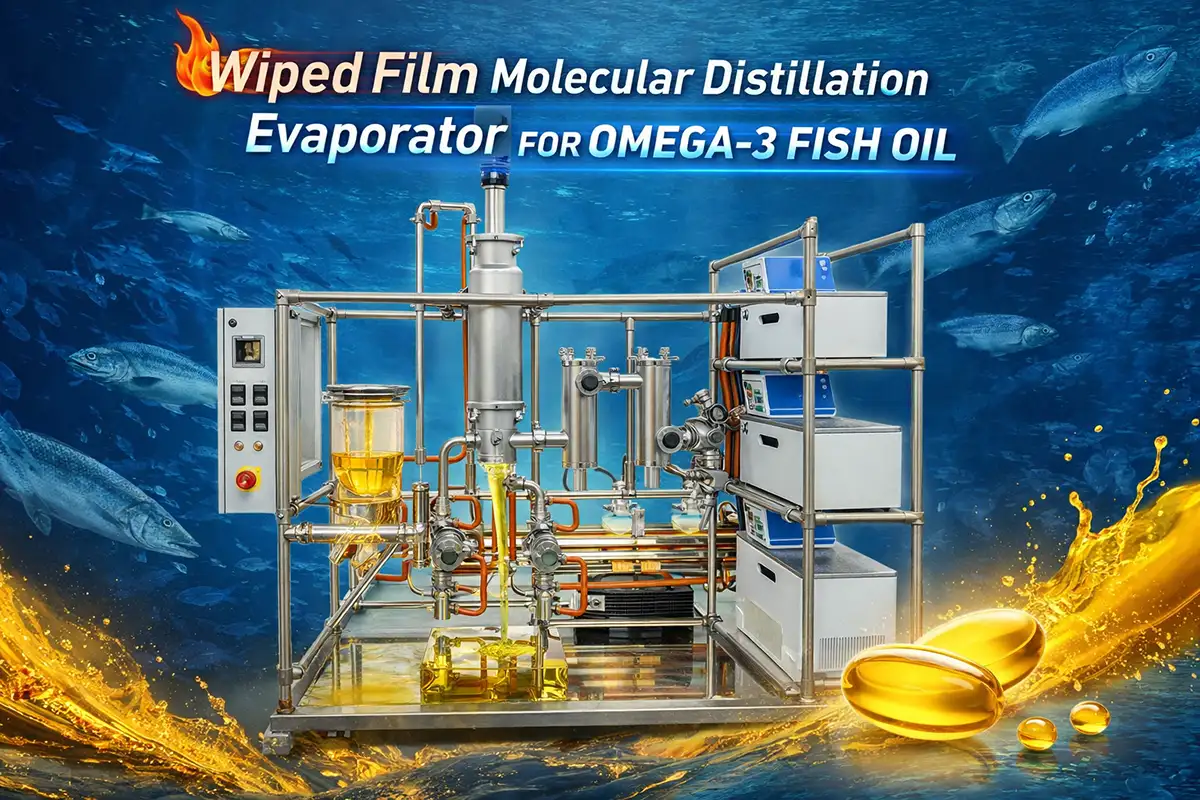
How these specs translate to fish oil quality
Evaporation area + feed rate: together determine film loading. A stable thin film improves heat transfer and reduces overheating.
Rotor speed (rpm): supports uniform film formation and fast renewal of the surface—key for low residence time.
Wide operating temperature range: allows process development (deodorization vs. fractionation) without changing core hardware.
I usually match the choice to the target kg/h and development stage. For formulation trials or small batches, KDBM‑60/80 can be enough. For continuous pilot runs where multiple passes and optimization are needed, KDBM‑150 to KDBM‑230 offers a more practical throughput window.
What users typically want to know (and the direct answers):
1) Will odor be reduced? Yes—molecular distillation preferentially removes volatile odor-active compounds under high vacuum.
2) Will EPA/DHA be preserved? When properly tuned, the process minimizes thermal exposure and helps retain omega‑3 integrity.
3) Is it scalable? Yes—units are commonly available from lab to pilot to production scale, with throughput primarily driven by evaporation area and feed system design.
Why a Molecular Distillation System Is a Strong Fit for Premium Fish Oil
Because it targets odor while respecting the chemistry of omega‑3s.
From an equipment perspective, the most important “promise” of molecular distillation for fish oil is not magic deodorization—it isprocess control: vacuum level, film thickness, residence time, and condenser design all work together to separate what smells from what sells.
If a process requires gentle odor reduction while keeping EPA/DHA potency, a well-designed molecular distillation system is often the most direct route to consistent results.