
Can Tocotrienols (Tocotrienols, T3) Be Enriched by Molecular Distillation?
Tocotrienols (often called T3) are a valuable part of the vitamin E family, but they usually appear in complex oils together with triglycerides, sterols, and tocopherols. The key practical question is straightforward: can molecular distillation enrich tocotrienols without burning or degrading them?This article explains what works, why it works, and what operating and equipment features matter most.
1) The short answer: Yes—tocotrienols can be enriched, but not “magically separated” in one step
Tocotrienols are heat-sensitive, high-boiling molecules typically found in deodorizer distillate (e.g., palm, rice bran), or in specialty oils where the feed also contains free fatty acids, monoglycerides, sterols, squalene, and tocopherols.Molecular distillation (often implemented as short path or wiped film molecular distillation) is widely used to enrich these valuable minor components because it operates under high vacuum and short residence time.
From an equipment and process perspective, the realistic answer is no. Molecular distillation is excellent for fractionation—removing lighter volatiles and separating heavy fractions— but high-purity T3 typically needs a multi-step train (e.g., pre-treatment + multi-stage distillation + polishing such as chromatography, depending on target specs).
What molecular distillation does extremely well is create a tocotrienol-rich cut while keeping thermal stress low. If the goal is “make T3 content significantly higher than in the original oil,” molecular distillation is often one of the most practical industrial tools.
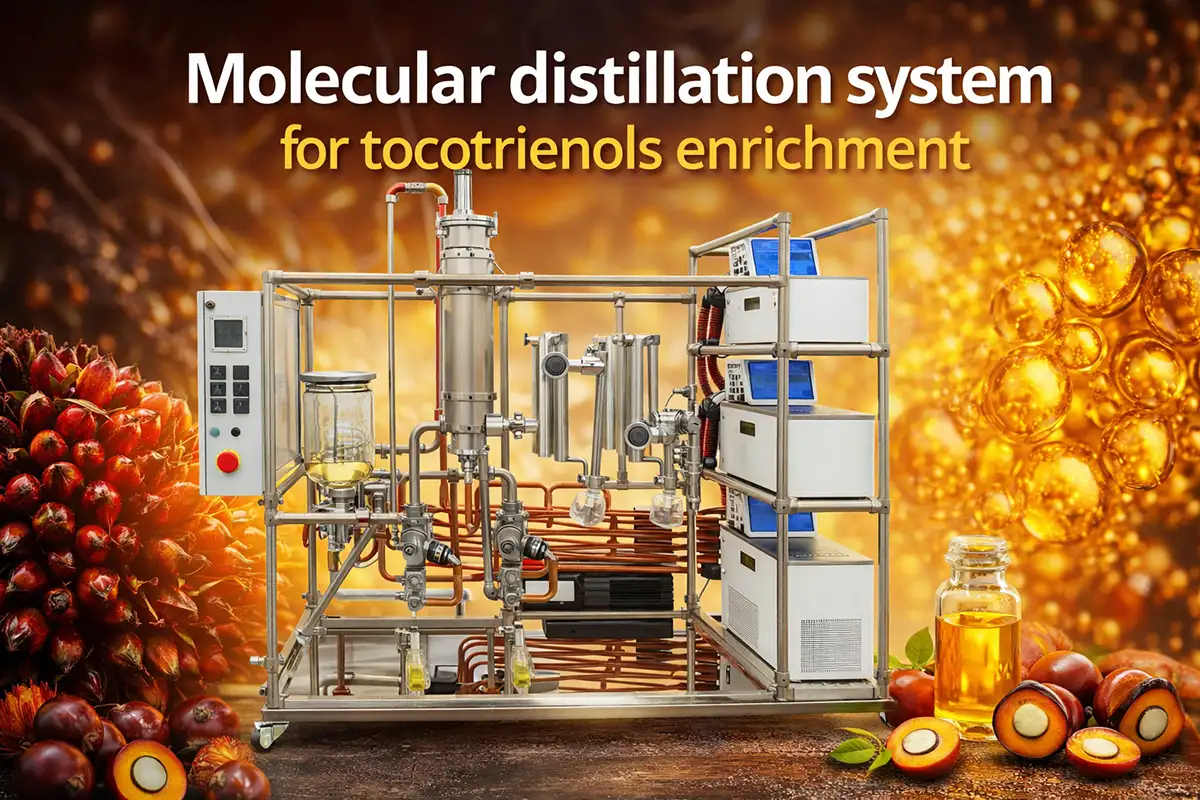
2) Why molecular distillation is a good fit for tocotrienols
Tocotrienols are valuable precisely because they are fragile and present at low concentration—two factors that make conventional high-temperature distillation risky. Molecular distillation works differently:
Very high vacuum lowers the effective boiling behavior, enabling separation at lower temperatures.
Thin film formation (wiped film) improves heat transfer while reducing the time material stays hot.
Short path to condenser reduces the chance of re-evaporation and side reactions.
For anyone evaluating equipment, it helps to connect these principles to a concrete design concept. If a deeper dive is needed, the core mechanism is explained here:wiped film evaporator working principle.
3) What process results to expect (and what influences them)
In real production, enrichment performance depends mainly on feed composition and cut strategy. Tocotrienols often sit in a “middle-to-heavy” window relative to lighter volatiles (like free fatty acids) and heavier triglycerides. This is why multi-stage fractionation is common: one stage removes the easy volatiles; later stages concentrate the target fraction.
My answer is yes, when configured correctly. The safety comes from the combination of high vacuum,thin film, and short residence time. The process aims to reduce thermal history rather than eliminate heat entirely. In practice, stable operation (vacuum integrity, smooth wiping, reliable condensation) matters just as much as temperature setpoints.
When comparing configurations, many teams ask about “short path evaporation” versus wiped film styles. A practical comparison is summarized here:short path evaporation vs wiped film evaporation.
If the target is a robust enrichment workflow, the selection typically focuses on:stable vacuum, controlled feed rate, appropriate evaporator diameter / area, and repeatable fraction collection.
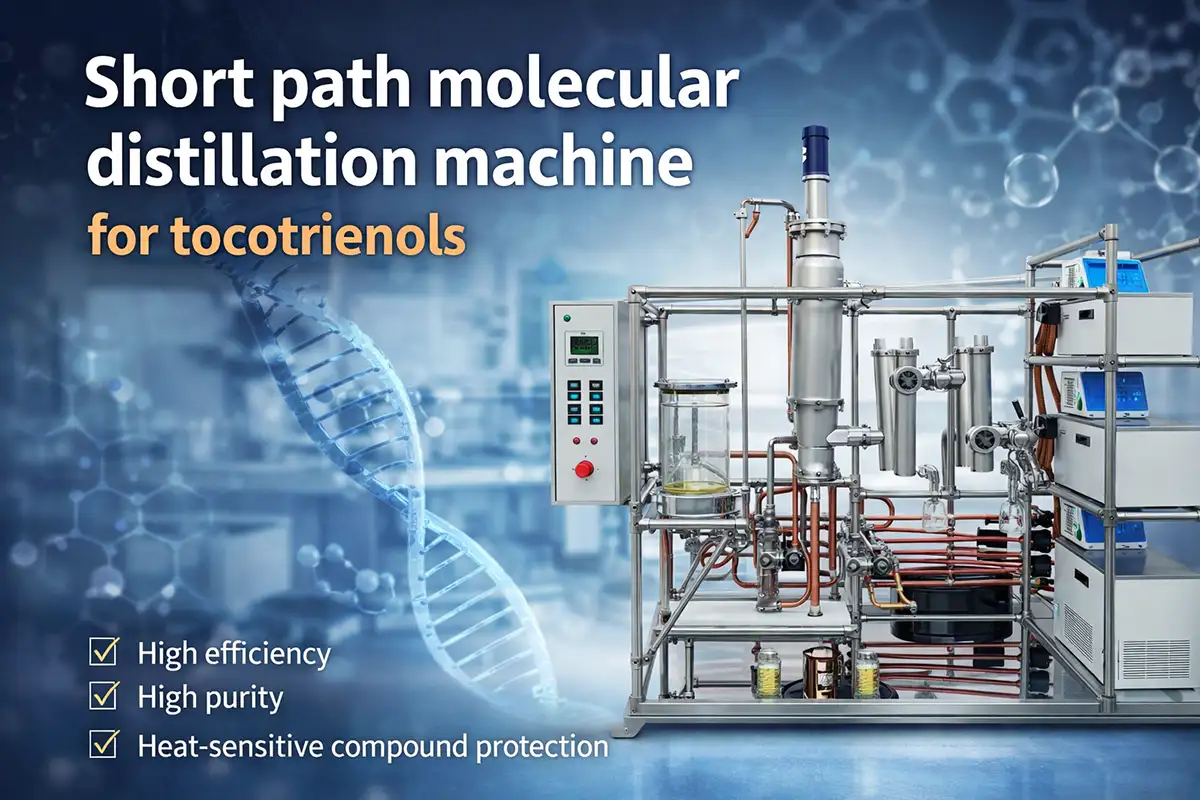
4) Equipment parameters that matter (example stainless-steel molecular distillation series)
Below is a practical snapshot of a stainless-steel molecular distillation line (KDBM series). For tocotrienols enrichment, these parameters help estimate scale, throughput, and film-forming capability.
| Model | Main Evaporator Diameter (mm) | Effective Evaporation Area (m²) | Feeding Speed (kg/h) | Feed Tank Volume (L) | Max Speed (R/min) | Collecting Bottle (L) | Motor Power (W) |
|---|---|---|---|---|---|---|---|
| KDBM-60 | 60 | 0.06 | 0.5–3 | 1 | 450 | 1 | 90 |
| KDBM-80 | 80 | 0.10 | 1–5 | 1 | 450 | 1 | 120 |
| KDBM-100 | 100 | 0.15 | 2–8 | 2 | 450 | 2 | 120 |
| KDBM-150 | 150 | 0.25 | 3–15 | 2 | 450 | 3 | 120 |
| KDBM-200 | 200 | 0.35 | 5–20 | 5 | 300 | 5 | 200 |
| KDBM-230 | 230 | 0.50 | 8–30 | 5 | 300 | 5 | 200 |
Voltage: 220/50 (customizable)
My recommendation is to start with the decision variable that actually drives success: throughput vs. controllability. For early feasibility work, smaller evaporator diameters (e.g., 60–100 mm) can be easier to tune and cheaper to run; for semi-production, 150–230 mm offers more area and higher feed rates. The best choice comes from feed availability, target kg/h, and how many stages are planned.
For equipment selection pages and configuration options, a useful reference is:molecular distillation system.
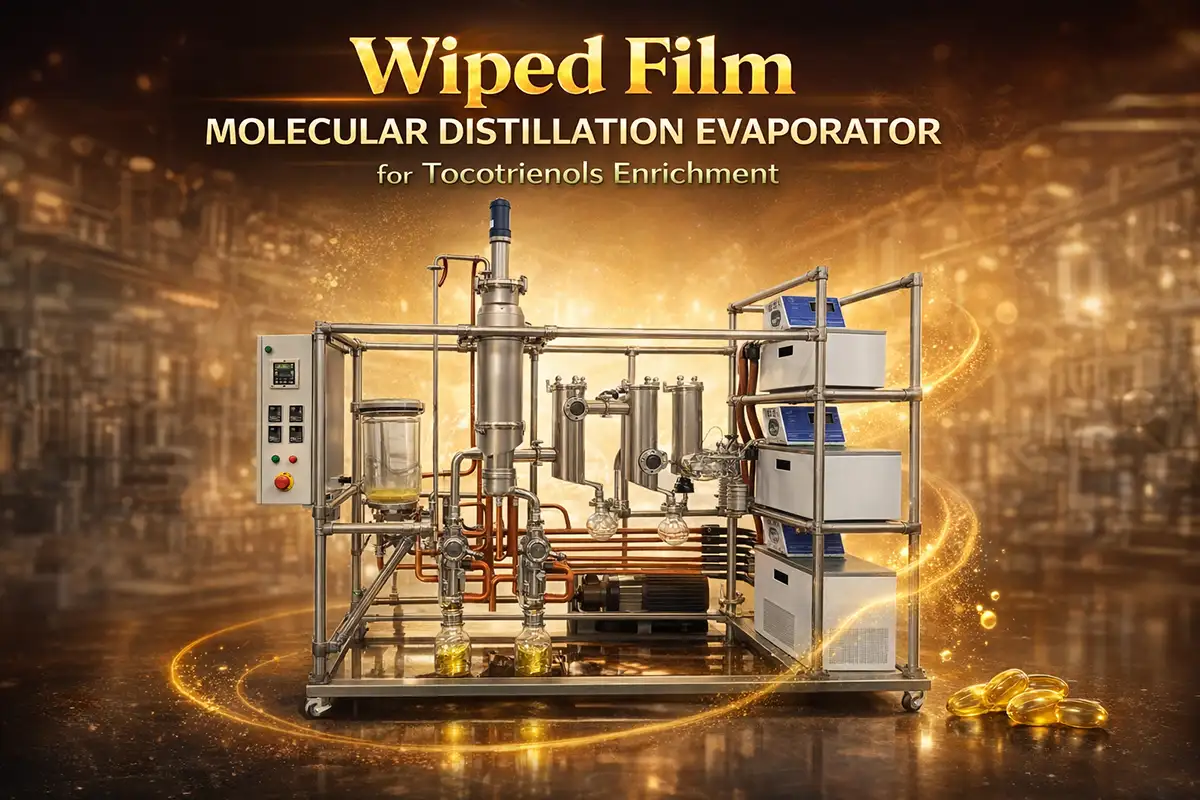
5) A simple “what users really want to know” checklist
If the goal is tocotrienols enrichment (not just “running a distillation”), these are the practical answers most teams look for:
Can T3 be enriched? Yes—molecular distillation can produce a tocotrienol-rich fraction, especially in multi-stage setups.
Will T3 degrade? Risk is minimized by high vacuum + thin film + short residence time, but process control still matters.
Is one pass enough? Often no; fractionation strategy (cuts, stages, recycle) usually determines final enrichment.
What equipment features matter most? Vacuum stability, wiper design/speed, condenser efficiency, and repeatable feeding/collection.