
Can Squalene Reach Cosmetic Grade After Molecular Distillation Purification?
Squalene is valued in skincare for its lightweight feel and compatibility with skin lipids. But “good for skin” does not automatically mean “cosmetic grade.” The real question is whether molecular distillation can reliably push squalene purity and stability to the level cosmetic manufacturers expect—without damaging a heat‑sensitive oil.
The practical answer
In most real-world projects, yes—a well-designed molecular distillation system can help squalene meet common cosmetic-grade expectations by removing odor, color bodies, waxes, heavy residues, and oxidation-prone impurities. However, results depend on raw material quality, oxygen exposure, vacuum level, residence time, and how many passes are used.
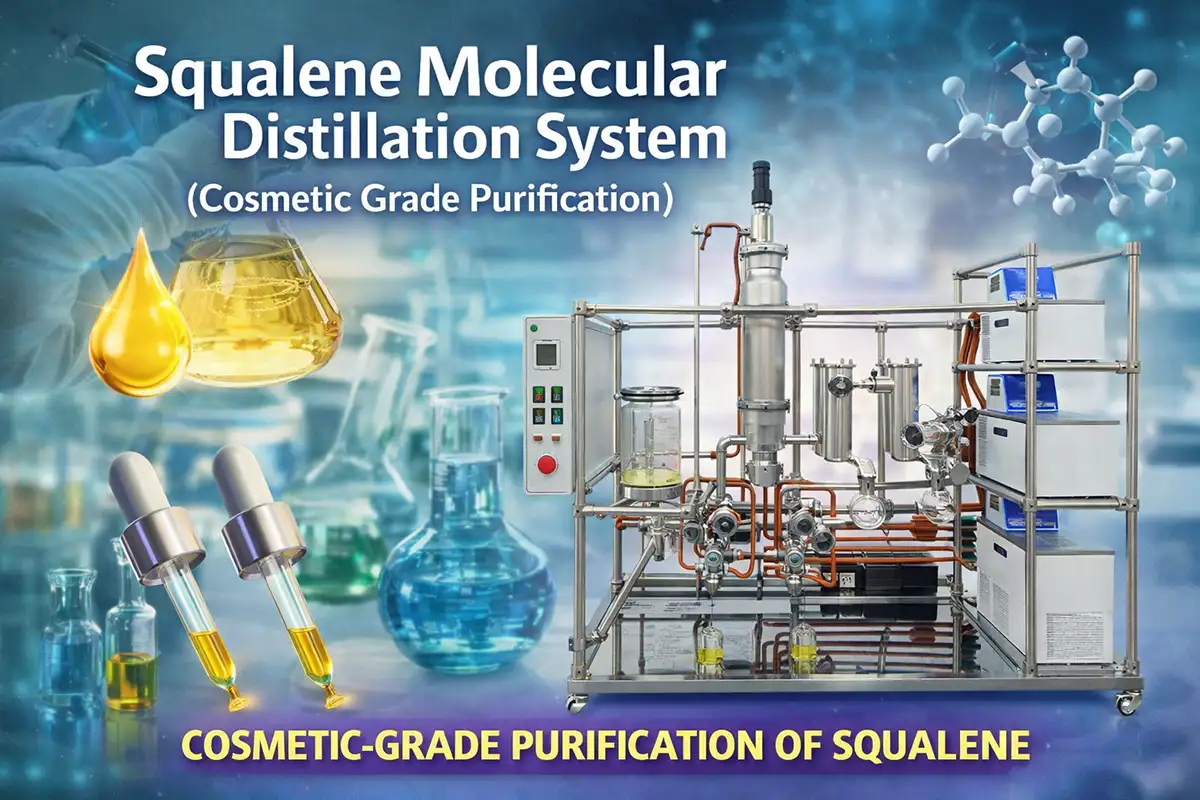
What “cosmetic grade” usually means for squalene
Cosmetic brands rarely care about the distillation method itself—they care about the spec sheet. While specifications vary by region and customer, purchasing teams commonly review:
Because “natural” oils often contain a mixture: squalene plus triglycerides, sterols, pigments, odor compounds, and trace impurities. I typically see that the sensory issues (odor/color) and stability issues (easy oxidation) come from minor components—not from squalene itself. Molecular distillation targets those differences in volatility under high vacuum.
Why molecular distillation is a strong fit for squalene
Squalene is sensitive to heat and oxygen. Molecular distillation (often short-path style) is designed for high-boiling, heat-sensitive materials by combining high vacuum, thin film, and very short residence time. That typically means less thermal degradation than traditional distillation.
For readers who want the fundamentals, the working mechanism is similar to thin-film evaporation. A concise reference is:wiped film evaporator working principle. When deciding between approaches, this comparison is also useful:short path evaporation vs wiped film.
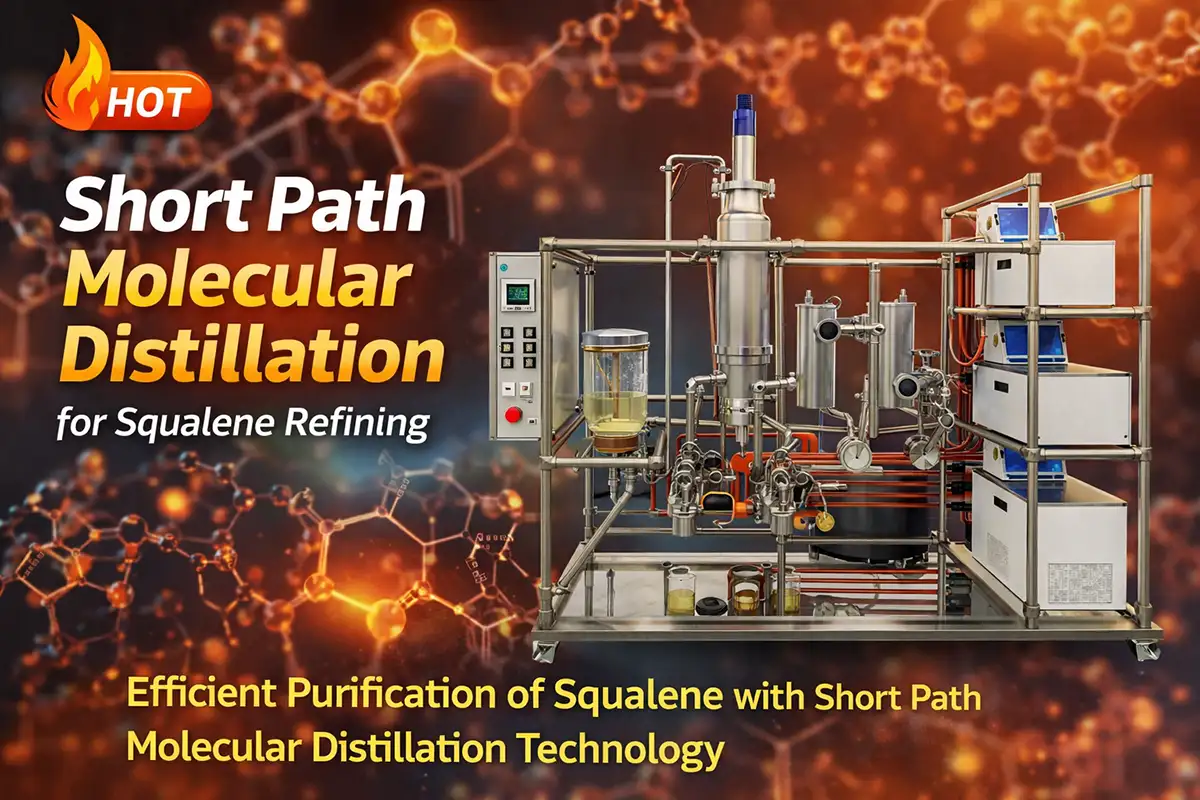
Key process controls that decide the final quality
In squalene refining, “cosmetic grade” is achieved more by process discipline than by a single magic temperature. In my experience, these controls matter the most:
Lower pressure reduces required evaporation temperature and helps protect squalene from thermal stress. Stable vacuum (not just “low on paper”) also improves cut consistency and reproducibility.
A wiped film spreads feed into a thin layer, improving heat transfer and mass transfer while minimizing time at temperature— crucial for limiting darkening and off-odor formation.
Purifying squalene but allowing oxygen pickup in storage can erase the benefit. In practice, nitrogen blanketing, sealed transfers, and proper packaging are often as important as the distillation pass itself.
Not always. I usually treat the first pass as “cleanup” (remove the most volatile odor notes and the heaviest residues), and then evaluate color, odor, and oxidation markers before deciding on a second pass. Raw material variability is the main reason one-pass results differ between batches.
Example equipment parameters (why sizing matters)
Selecting a molecular distillation system is not only about “can it distill squalene,” but also about throughput, controllability, and scale-up. Below is a sample parameter set for stainless-steel molecular distillation models (commonly used for pilot to small production):
| Model | Main Evaporator Diameter (mm) | Effective Evaporation Area (m²) | Feeding Speed (kg/h) | Max Speed (rpm) | Motor Power (W) | Operating Temp (°C) | Voltage (V/Hz) |
|---|---|---|---|---|---|---|---|
| KDBM-60 | 60 | 0.06 | 0.5–3 | 450 | 90 | -90 to 220 | 220/50 (customizable) |
| KDBM-80 | 80 | 0.10 | 1–5 | 450 | 120 | -90 to 220 | 220/50 (customizable) |
| KDBM-100 | 100 | 0.15 | 2–8 | 450 | 120 | -90 to 220 | 220/50 (customizable) |
| KDBM-150 | 150 | 0.25 | 3–15 | 450 | 120 | -90 to 220 | 220/50 (customizable) |
| KDBM-200 | 200 | 0.35 | 5–20 | 300 | 200 | -90 to 220 | 220/50 (customizable) |
| KDBM-230 | 230 | 0.50 | 8–30 | 300 | 200 | -90 to 220 | 220/50 (customizable) |
As throughput increases (feeding speed and evaporation area), maintaining the same cut quality typically requires matching vacuum performance, condenser design, and stable temperature control—especially for a narrow “cosmetic-grade” window.
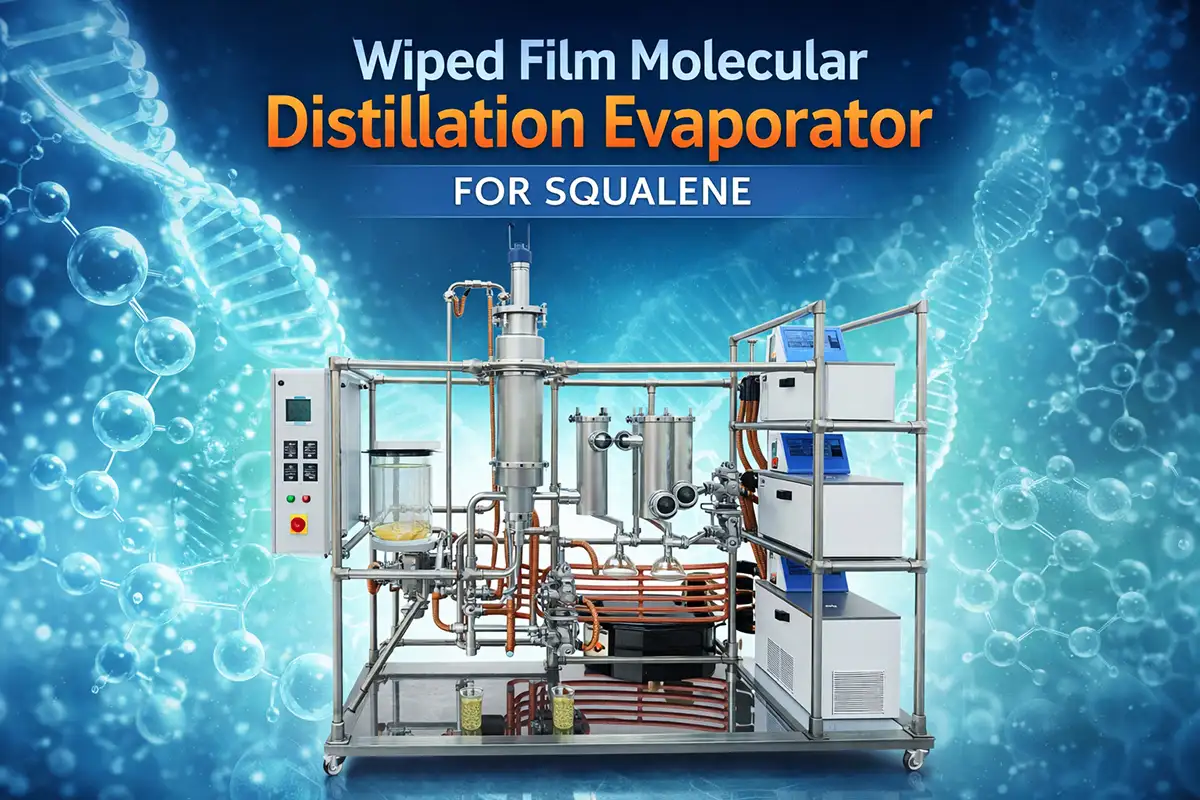
What quality improvements are realistic after molecular distillation?
Molecular distillation is commonly used to upgrade oils for personal care because it can:
Reduce odor by separating lighter odor-active components.
Improve appearance by removing colored impurities and some polymerized residues.
Increase assay by concentrating the desired fraction (squalene) and rejecting heavy ends.
Improve stability when oxidation catalysts and unstable minor components are removed (and oxygen exposure is controlled).
I recommend confirming at least: squalene content (assay), color, odor panel feedback, and oxidation indicators such as peroxide value. If the upstream source has risk factors, adding contaminant screens (e.g., heavy metals) and residual solvent checks can prevent surprises during brand qualification.
A quick authority reference (why purity matters in cosmetics)
Cosmetic markets are increasingly strict about ingredient quality and documentation. For example, theEuropean Commission (SCCS Notes of Guidance) emphasizes robust safety assessment inputs, where impurity profiles and stability data can directly affect risk assessment outcomes. In other words: purification is not only about “looking clear,” but also about supporting compliance and brand trust.
When equipment selection is the next step, this page is a direct starting point for system options:molecular distillation system. For projects that specifically prefer compact short-path designs, see:short path molecular distillation machine.